

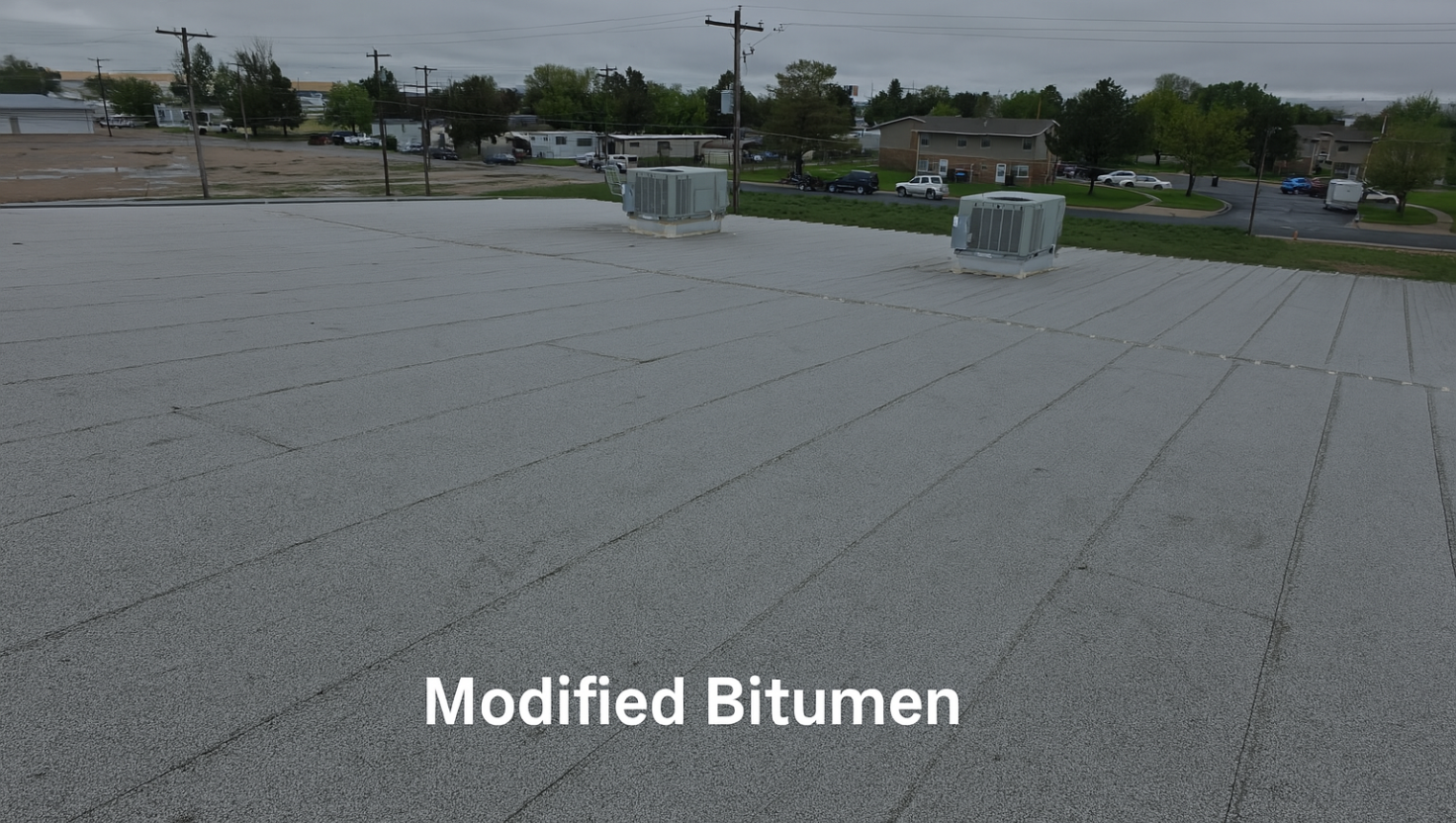
Modified bitumen roofing is an asphalt-based membrane built for low-slope and flat commercial roofs. It layers polymer-reinforced sheets over a base to create a tough, waterproof surface that handles Nebraska hail, high-plains wind, and heavy snow load well. Mod-bit can be torch-applied, set in cold adhesive, or self-adhered, and it typically lasts 15 to 25 years. It is a strong choice when you want puncture resistance and easy repairs on a flat roof. To confirm whether Pete’s Builders covers your part of Nebraska, call (307) 514-5489.
Quick answer
Modified bitumen is an asphalt-based membrane applied to flat and low-slope roofs in reinforced layers, giving durable, waterproof coverage that handles foot traffic and Omaha, NE’s temperature extremes. It’s a proven option for commercial low-slope roofs.
| Mod-bitumen | Detail |
|---|---|
| Type | Asphalt-based reinforced membrane |
| Install | Rolled or torch-applied in layers |
| Durability | Handles foot traffic & temp swings |
| Waterproofing | Multiple bonded plies |
| Best for | Flat & low-slope commercial roofs |
What is modified bitumen roofing?
Modified bitumen, often called mod-bit, is a modern evolution of the old built-up roof (BUR). Manufacturers blend asphalt with polymers to make the material more flexible and durable. The two most common polymers are APP (atactic polypropylene) and SBS (styrene-butadiene-styrene).
SBS behaves like rubber and flexes in cold temperatures, which matters across Nebraska and Wyoming winters. APP is more heat-resistant and stands up to strong UV exposure on the high plains. Both come in rolled sheets that are layered and sealed to form a continuous waterproof membrane.
Because mod-bit is installed in multiple plies, it offers redundant protection. If the cap sheet is scuffed, the base layers still keep water out. That layered strength is one reason building owners across eastern and western Nebraska keep choosing it for flat commercial roofs.
How is modified bitumen roofing installed?
There are three main installation methods, and the right one depends on your building, budget, and safety needs.
Torch-applied: A roofer uses an open flame to melt the underside of the sheet, bonding it to the roof. This creates a very strong seal but requires an experienced crew and strict fire safety.
Cold-adhesive: The sheets are bonded with a liquid adhesive instead of heat. This is a safer option for occupied buildings and avoids open flame near sensitive structures.
Self-adhered: Peel-and-stick sheets bond without heat or wet adhesive. They install cleanly and quickly, which helps on smaller Nebraska commercial roofs.
Most projects start with a base sheet, add one or more ply sheets, and finish with a granulated cap sheet. The granules protect against UV and add fire resistance. A typical mod-bit roof is completed in one to three days, weather permitting.
How does mod-bit perform against Nebraska hail, wind, and snow?
The high plains hit roofs hard, and mod-bit is built to take the punishment. Its multi-ply thickness resists hail impact far better than single-layer rolled roofing. That matters in hail-prone corridors stretching from Scottsbluff to North Platte.
Wind uplift is another concern across open Nebraska terrain. Because mod-bit is fully adhered across the roof deck, there are no loose edges for gusts to catch. Properly detailed flashing at parapets and penetrations keeps wind from working under the membrane.
Snow load and freeze-thaw cycles test every flat roof. SBS-modified sheets stay flexible in the cold, so they resist the cracking that plagues brittle membranes. A correctly sloped and drained mod-bit roof sheds meltwater instead of letting it pond and refreeze.
UV exposure is relentless at high-plains elevations. A granulated cap sheet shields the asphalt beneath from sun damage, slowing the drying and cracking that shortens a roof’s life. This combination of cold flexibility and UV protection is why mod-bit fits Nebraska and Wyoming so well.
What are the pros and cons of modified bitumen roofing?
Mod-bit earns its reputation, but no roofing system is perfect. Knowing the trade-offs helps you make a confident decision.
Pros: excellent puncture and impact resistance, redundant waterproof plies, easy and affordable spot repairs, proven longevity, and good performance in temperature swings common to Nebraska and Wyoming.
Cons: darker cap sheets can absorb heat unless coated with a reflective finish, torch-down methods carry fire risk during install, and installation quality depends heavily on crew skill. Poor seams are the most common failure point, which is why professional installation matters.
How long does modified bitumen roofing last, and what does it cost?
As a general industry range, a well-installed and maintained mod-bit roof lasts about 15 to 25 years. Regular inspections, clean drains, and prompt seam repairs push it toward the higher end of that range.
Cost varies by roof size, deck condition, number of plies, and installation method. Industry-wide, modified bitumen commonly falls in a mid-range price bracket for commercial flat roofing, often quoted between roughly $4 and $8 per square foot installed. Your exact number depends on your specific building, so ask for a written estimate.
These figures are general market ranges, not a quote. Pete’s Builders provides project-specific pricing after a roof inspection.
When is mod-bit the right choice vs TPO or EPDM?
Choosing a flat-roof system comes down to your priorities. Each option has a sweet spot.
Choose mod-bit when you want maximum impact and puncture resistance, redundant waterproofing, and simple repairs. It suits roofs with foot traffic or equipment that could damage a thinner membrane.
Choose TPO when reflective, energy-saving white membrane is the top goal and the roof sees little traffic. Choose EPDM for a proven, economical rubber membrane on simple roof shapes. A qualified roofer can walk your building and recommend the best fit for your Nebraska climate exposure.
The decision rarely comes down to price alone. Roof slope, drainage, foot traffic, and your building’s use all shape the right answer. An on-site inspection removes the guesswork and gives you a system matched to how your building actually performs through the seasons.
Frequently asked questions
Does Pete’s Builders service Omaha and eastern Nebraska?
Pete’s Builders is based in Cheyenne, Wyoming, and primarily serves western and panhandle Nebraska, including Scottsbluff, Sidney, and North Platte. Omaha sits in far eastern Nebraska. Call (307) 514-5489 to confirm current coverage for your address before scheduling.
Is modified bitumen good for flat commercial roofs?
Yes. Its multi-ply design and impact resistance make it a leading choice for low-slope commercial buildings across the high plains.
Is torch-down safe for my building?
Torch-applied mod-bit creates a strong bond but uses open flame. For occupied or fire-sensitive buildings, cold-adhesive or self-adhered methods are safer alternatives.
How long does installation take?
Most modified bitumen roofs are installed in one to three days, depending on roof size, deck repairs, and weather conditions.
Can mod-bit handle Nebraska hail?
Its layered thickness resists hail impact well, outperforming single-layer rolled roofing. No roof is fully hail-proof, but mod-bit is among the more resilient flat-roof options.
How do I extend the life of my mod-bit roof?
Schedule regular inspections, keep drains clear, repair seams promptly, and consider a reflective coating to reduce heat and UV wear.
Talk to Pete’s Builders about your flat roof
If you own a commercial or flat roof and want to know whether modified bitumen is right for it, reach out for straight answers. Pete’s Builders installs and repairs mod-bit roofing built for high-plains weather.
Pete’s Builders Commercial & Residential Roofing
1816 Central Ave, Cheyenne, WY 82001
Phone: (307) 514-5489
Web: petesbuilders.com
Reviewed by the Pete’s Builders Roofing Team — licensed & insured Wyoming roofing contractors.