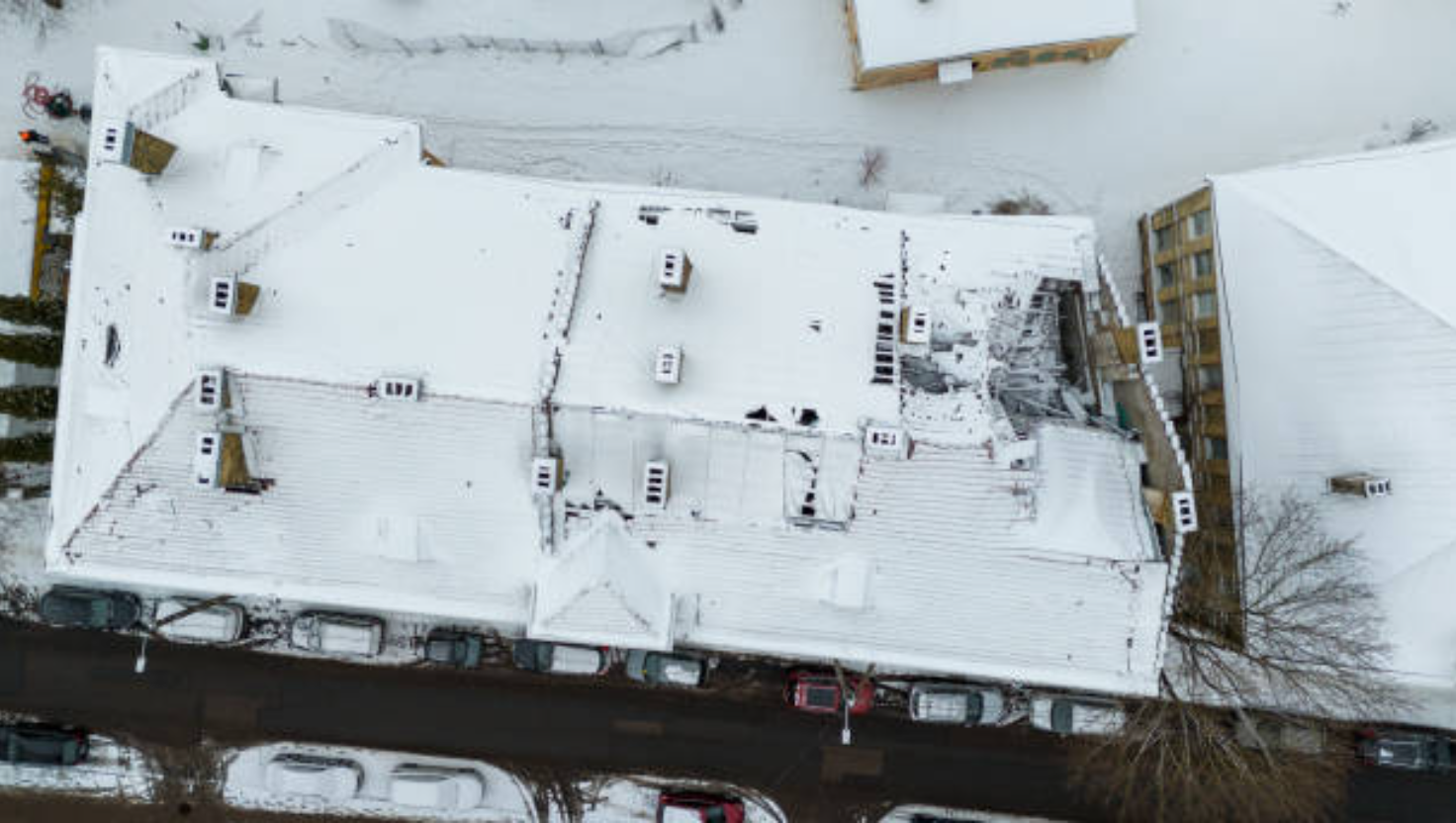
Snow and ice damage roofs mainly through three mechanisms: ice dams, excess snow load, and freeze-thaw cycles that force water under shingles. Left unchecked, winter roof problems in Cheyenne lead to leaks, structural stress, mold, and costly repairs. This guide breaks down the most common types of winter roof damage, the warning signs, and how Wyoming homeowners and businesses can prevent them.
Quick answer
Snow and ice damage roofs mainly through ice dams and snow load. Ice dams form when attic heat melts snow that refreezes at the cold eaves, backing water up under the shingles; heavy snow load stresses the structure, and repeated freeze-thaw cycles crack flashing and seals. Cheyenne’s first freeze averages around September 29, so insulation, ventilation, and sound flashing matter.
| Winter threat | Damage it causes |
|---|---|
| Ice dams | Water backs up under shingles → leaks |
| Snow load | Structural stress on the roof |
| Freeze-thaw | Cracks flashing, seals & shingles |
| Poor ventilation | Warm attic worsens ice dams |
| Clogged gutters | Traps ice at the eaves |
Key takeaway: Most winter roof damage is preventable with good ventilation, insulation, and a pre-winter inspection. The homeowners who get hit hardest are usually the ones who skipped both.
1. Ice dams — the most common winter roof problem
Ice dams form when heat escaping into the attic melts snow on the upper roof; the meltwater runs down and refreezes at the cold eaves, building a ridge of ice. Water then backs up behind the dam and seeps under the shingles into your home. Signs include thick icicles along the eaves and water stains on interior walls or ceilings. The root cause is usually poor attic ventilation and insulation.
2. Snow load stress
Heavy, wet snow is deceptively heavy. When it accumulates — especially on flat and low-slope roofs — it stresses the roof structure, and repeated loading can cause sagging or, in extreme cases, structural failure. Drifting from Wyoming’s wind concentrates snow on one part of the roof, making the load uneven and heavier than it looks.
3. Freeze-thaw cycles and leaks
Cheyenne’s temperature swings drive constant freeze-thaw cycles. Water works into small cracks in shingles, flashing, and seals, then freezes and expands, widening the gap each time. Over a winter, a tiny flaw becomes a leak — one reason small fall repairs matter so much.
4. Attic condensation and moisture
Warm, moist indoor air that reaches a cold attic condenses on the underside of the roof deck. That hidden moisture rots decking, ruins insulation, and grows mold — often without any visible roof damage until it’s advanced.
Warning signs of winter roof damage
- Thick icicles or ice ridges along the eaves
- Water stains or discoloration on ceilings and walls
- Sagging areas on the roof
- Frost, moisture, or mold on the attic roof deck
- Damp insulation or a musty attic smell
- Interior drips during a thaw
How to prevent snow and ice roof damage
- Balanced ventilation — keeps the attic cold and dry, the #1 defense against ice dams
- Proper insulation — stops attic heat from melting rooftop snow unevenly
- Ice-and-water barrier — a membrane at the eaves that blocks backed-up water
- Clean gutters before winter so meltwater can drain
- Pre-winter inspection — fix small issues before snow arrives
- Safe snow removal — clear heavy snow from the roof edge with a roof rake, from the ground
Removing snow safely
If snow load is a concern, a long-handled roof rake lets you pull snow off the lower roof edge while standing safely on the ground. Never climb onto a snowy or icy roof, and never chip at ice dams with tools — you’ll damage the shingles. For heavy buildup or existing ice dams, call a professional.
When to call a professional
Call right away if you see interior leaks, sagging, or large ice dams — these can worsen fast and cause structural or water damage. A professional can safely remove snow and ice, find the source, and address the underlying ventilation or insulation problem so it doesn’t recur.
Winter roof damage on commercial buildings
Flat and low-slope commercial roofs are especially vulnerable in winter. Snow load and drifting concentrate weight, ponding meltwater refreezes and stresses seams, and clogged drains back water up onto the membrane. Regular winter monitoring, safe snow removal, and clear drains protect your building and prevent business-disrupting leaks.
Why a pre-winter inspection pays off
The cheapest way to survive a Wyoming winter is to prepare before the first big snow. A fall inspection catches worn flashing, cracked shingles, poor ventilation, and clogged gutters — the exact weak points that snow and ice exploit. Fixing them in fall costs a fraction of the emergency repairs, water damage, and mold that follow a mid-winter leak.
Frequently asked questions
What causes ice dams on a roof?
Heat escaping into the attic melts rooftop snow, which refreezes at the cold eaves and dams up. Poor attic ventilation and insulation are the usual culprits.
How do I prevent ice dams in Cheyenne?
Improve attic ventilation and insulation, add an ice-and-water barrier at the eaves, keep gutters clear, and clear heavy snow from the roof edge with a roof rake.
Is snow load dangerous for my roof?
Heavy, wet or drifting snow can stress the structure, especially on flat roofs. If you notice sagging or hear creaking, have it inspected and the snow removed safely.
Should I remove snow from my roof myself?
Only from the ground with a roof rake. Never climb a snowy roof or chip at ice — call a professional for heavy buildup or ice dams.
Does insurance cover winter roof damage?
Sudden damage like a collapse or a burst leak is often covered, though gradual damage from neglect may not be. Documenting the damage and its cause helps your claim.
Can ice dams damage my roof even without a leak inside?
Yes — even without an obvious interior leak, backed-up water can rot the roof deck and soak insulation. That’s why it’s worth addressing ice dams and their cause promptly.
How often should I clear snow off my roof?
Only when heavy, wet snow builds up (especially on flat roofs) or drifts deeply on one area. Use a roof rake from the ground, and call a pro for large or icy buildup.
Do you offer emergency roof help for winter leaks?
Yes — if snow or ice causes a leak, we respond to secure the roof and stop water damage, then address the underlying cause once conditions allow.
Worried about ice dams or snow load this winter? Call Pete’s Builders at (307) 514-5489 for a free roof inspection in Cheyenne, WY. Serving Cheyenne, Laramie, and nearby Wyoming and Nebraska communities.