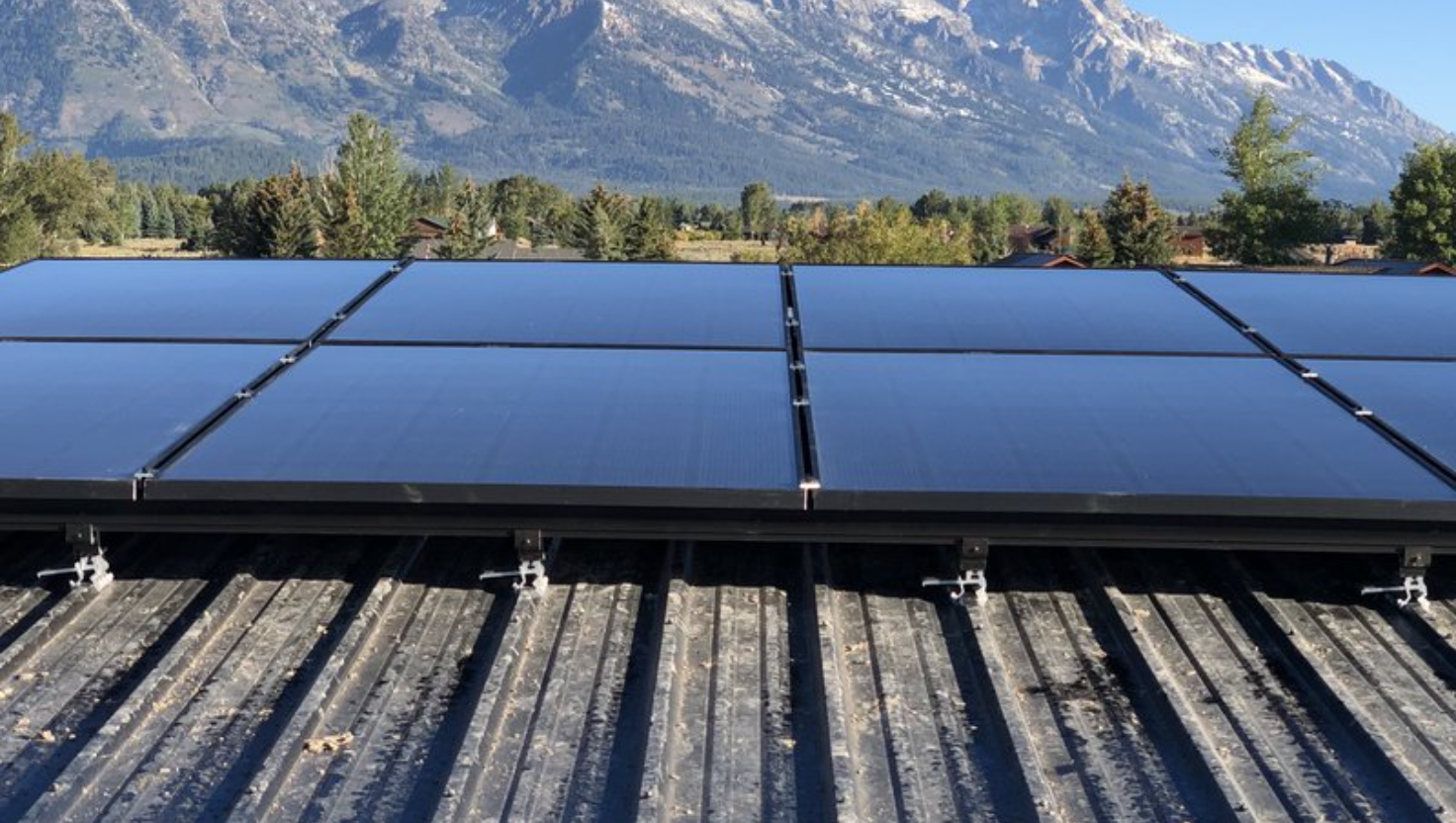
To safely clean rooftop solar panels in Cheyenne, WY: clean on a cool, overcast morning when the glass is cold. First, shut the system down at the inverter and AC disconnect. Rinse loose Cheyenne dust and pollen with a garden hose on a gentle setting.
Quick answer
Solar panels can be added to most sound roofs, but the roof should have plenty of remaining life and proper flashing at every mount to stay watertight. In Cheyenne, keeping panels clear of dust, pollen, and snow helps output — and a roof inspection before installation avoids problems later.
| Solar + roof | Detail |
|---|---|
| Roof condition | Should have ample remaining life first |
| Mount flashing | Every penetration must be sealed |
| Cleaning | Clear dust, pollen & snow for output |
| Inspection | Check the roof before & after install |
| Best roofs | Metal & newer shingle roofs |
Then wash gently with plain water and a soft brush or squeegee on a telescoping pole. For grime, add a drop of mild dish soap. Never use pressure washers, abrasive pads, or hard well water. Whenever the work means climbing your roof, hire a licensed roofer to protect both you and the roof surface.
Planning solar cleaning or a roof check first? Call Pete’s Builders at (307) 514-5489 for a roof inspection before or after solar work anywhere in the Cheyenne area.
Why do solar panels lose output in Cheyenne’s climate?
Cheyenne sits near 6,000 feet on the high plains, and that elevation shapes how dirty your panels get. High-altitude UV is intense, but so is the airborne dust carried on our steady chinook winds. A fine grit settles on the glass and quietly blocks sunlight.
Spring and early summer add tree and grass pollen across the region, from downtown near Lions Park to the newer subdivisions off Dell Range Boulevard. Winter brings heavy snow load that lingers on panels for days. Each of these layers reduces how much energy your array produces.
Industry estimates generally suggest soiling can cut solar output by roughly 5% to 25%, depending on conditions. In a dusty, windblown place like Cheyenne, panels drift toward the higher end faster than in wetter climates. Regular cleaning simply lets your investment do its job.
How do I safely clean solar panels on my roof?
Safe cleaning starts on the ground, not the roof. Whenever possible, use a telescoping brush or hose from a stable spot and avoid climbing entirely. Most single-story Cheyenne homes allow ground-level cleaning of at least part of the array.
Follow these steps for a safe, glass-friendly clean:
- Pick the right time. Choose a cool, cloudy morning so cold water never hits hot glass and cracks it.
- Power down first. Switch off the inverter and the AC disconnect before any water touches the system.
- Rinse before you scrub. A gentle hose stream lifts loose Cheyenne dust so you do not grind it into the coating.
- Wash gently. Use a soft brush or squeegee with plain water; add a drop of mild dish soap only for stubborn grime.
- Skip harsh tools. No pressure washers, no abrasive pads, and no hard well water that leaves mineral spots.
- Dry and restart. Let the glass air-dry, then power the system back on and confirm normal output.
Cheyenne’s dry, mineral-rich water can leave streaks, so a final rinse with distilled or filtered water helps. Never walk directly on panels. The glass and cells are not built to carry your weight.
How often should I clean solar panels in Cheyenne?
For most Cheyenne homes, two cleanings a year is a sensible baseline. A spring clean clears winter grime and early pollen, while a late-summer clean removes accumulated dust before fall. Our windblown, high-plains conditions can push that toward three or four times a year.
Watch your production app for clues. A steady drop in output on sunny days often means soiling rather than a hardware fault. Homes near gravel roads, farm fields, or ongoing construction in rural Wyoming usually need cleaning more often than those in sheltered neighborhoods.
After a big dust event on strong chinook winds, a quick rinse can restore output fast. In winter, brushing snow off with a soft roof rake from the ground beats letting a heavy snow load sit for days.
Should I DIY or hire a pro to clean my panels?
Light, ground-level cleaning is a reasonable DIY task for many Cheyenne homeowners. If you can reach the panels safely with a pole from the ground, a gentle rinse and soft brush are usually enough. Keep water away from wiring and connectors.
Hire a professional when the array is on a steep pitch, a second story, or a slick metal roof. High-altitude sun, sudden gusts, and morning frost make Cheyenne roofs genuinely hazardous. A pro brings fall protection, the right footwear, and experience moving on roofing without causing damage.
Consider a pro too when panels have baked-on grime, bird droppings, or mineral staining that a rinse will not lift. Combining a cleaning with a roof and flashing check often makes the most sense. That way one trip protects both the panels and the roof beneath them.
Will cleaning damage my roof?
Careless cleaning can absolutely damage a roof, which is why a roofing contractor is often involved. Foot traffic on the wrong spots can crack tiles, dent metal panels, or scuff granules off asphalt shingles. Pooled water and forced spray can also find their way under flashing.
A roofer protects your roof during cleaning in several ways:
- Weight management. Working from ladders, standoffs, and load-spreading paths instead of stepping on panels or fragile areas.
- Water control. Directing runoff away from penetrations so it drains as the roof was designed to.
- Mount inspection. Checking the racking, bolts, and flashing seals that hold panels to the roof deck.
- Leak prevention. Spotting lifted shingles or worn sealant before they become a leak.
Because solar mounts penetrate the roof, those penetrations are common leak points in Cheyenne’s freeze-thaw and wind-driven rain. Pairing panel cleaning with a roof inspection catches small issues early. That roof-safety angle is exactly why Pete’s Builders treats solar cleaning as roof work.
Frequently Asked Questions
Can I clean solar panels myself in Cheyenne?
Yes, if you can reach them safely from the ground with a telescoping brush. Use plain water and a soft brush on a cool morning. Skip the job and call a pro whenever it means climbing onto the roof.
What is the best water to use on solar panels here?
Distilled or filtered water is best because Cheyenne’s hard water leaves mineral spots. If you use tap or well water, dry the glass or do a final low-mineral rinse. Avoid softened water high in salt.
Should I clean snow off my panels in winter?
Yes, gently. A soft-bristled roof rake used from the ground can clear a heavy snow load without scratching the glass. Never climb an icy roof, and let any thin remaining layer melt off on its own.
Can I use a pressure washer on rooftop panels?
No. Pressure washers can crack the glass, damage anti-reflective coatings, and force water past seals. A garden hose on a gentle setting is safer. High pressure often voids solar panel warranties as well.
How does dust from chinook winds affect my panels?
Cheyenne’s strong winds deposit fine grit that blocks sunlight and lowers output. A quick rinse after a major dust event restores much of that lost production. This is why local arrays often need cleaning more often than the national average.
Do you inspect the roof when cleaning panels?
Yes. We check the racking, flashing, and roof surface around every mount, since those penetrations are common leak points. Pairing cleaning with an inspection protects both your panels and the roof beneath them.
Book a roof inspection before or after your solar work
Cleaning is safest when the roof under your panels is sound. Pete’s Builders serves Cheyenne, Laramie, Burns, and rural Wyoming with roof-safe solar and roofing care.
Call (307) 514-5489 or visit us at 1816 Central Ave, Cheyenne, WY 82001. Learn more at petesbuilders.com.