
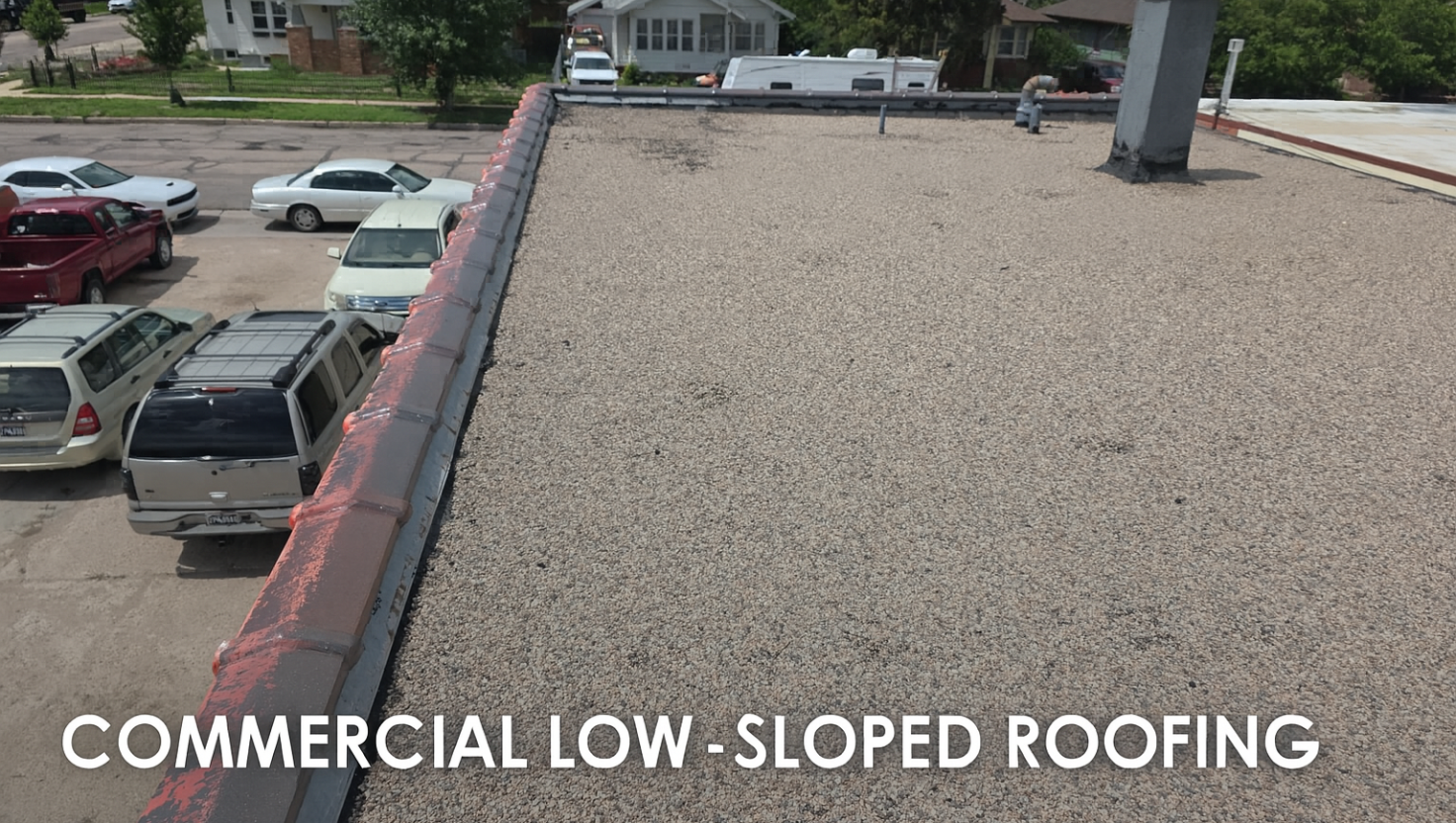
Commercial low-sloped roofing in Wyoming needs professional installation and ongoing maintenance because, unlike a pitched roof, it doesn’t drain by gravity — so any weak seam, clogged drain, or aging membrane lets water sit and work its way into the building. Combine that with Wyoming’s hail, high winds, heavy snow, and intense UV, and a neglected low-slope roof can fail years early, threatening inventory, equipment, and daily operations. Pete’s Builders installs, maintains, and repairs commercial low-slope roofing across Cheyenne, Laramie, and Scottsbluff, serving businesses since 2015 with an A+ Better Business Bureau rating.
Quick answer
The best roofing for a flat or low-slope roof in Wyoming is a single-ply or built-up membrane — TPO, EPDM, PVC, modified bitumen, or BUR — chosen for drainage, durability, and temperature swings. Proper slope and flashing matter as much as the membrane itself.
| Flat-roof option | Best for |
|---|---|
| TPO | Reflectivity & welded seams |
| EPDM | Durability & value |
| PVC | Chemical & fire resistance |
| Mod-bit / BUR | Foot traffic & redundancy |
| Key | Proper drainage & flashing |
What is low-sloped roofing?
A low-sloped roof is a roof with only a slight pitch — enough to encourage drainage, but far flatter than a residential pitched roof. It’s the standard for commercial buildings: offices, retail spaces, warehouses, and industrial and government facilities. Rather than shingles, low-slope roofs use continuous membrane systems that create a watertight surface across the whole roof. That design efficiently covers large footprints and leaves room for HVAC equipment, but it also means water clears slowly and depends entirely on proper slope, drains, and intact seams.
Why does low-sloped roofing need professional attention?
The margin for error is much smaller than on a pitched roof. Because water doesn’t run off quickly, a minor seam separation, a lifted flashing, or a blocked drain can allow water to pond and eventually penetrate the membrane. Once water gets beneath, it spreads horizontally through the insulation — often far from the visible interior leak — soaking the deck and quietly causing damage long before anyone notices a ceiling stain. Professional installation gets the slope, seams, and detailing right from the start, and professional maintenance catches the small problems while they’re still cheap to fix.
What are the most common low-slope roofing problems in Wyoming?
- Ponding water — standing water from poor drainage or snowmelt that accelerates membrane aging.
- Seam failures — seams that lift or separate over time, creating an entry point.
- Hail punctures and bruising — Wyoming’s hail can puncture membranes and dent metal components.
- Wind damage — high winds lifting edges, flashing, and poorly secured membrane.
- Flashing and penetration leaks — around drains, vents, and rooftop HVAC curbs.
- Foot-traffic damage — from technicians servicing rooftop equipment.
- UV weathering — high-altitude sun drying and degrading the membrane over the years.
What are the best low-slope roofing systems?
Several systems perform well on Wyoming commercial buildings:
- TPO — a reflective single-ply membrane that resists UV and helps reduce cooling costs.
- EPDM — a durable rubber membrane known for long service life and weather resistance.
- Modified bitumen — a reliable multi-layer system suited to certain applications.
- Roof coatings and restoration — sealing an aging but sound roof to extend its life affordably.
- Low-slope metal — durable and long-lasting where the application suits it.
The right choice depends on your building, budget, and lifecycle goals — which a professional assessment determines.
How does professional maintenance protect your investment?
Regular professional maintenance is the single most cost-effective thing a commercial property owner can do. Scheduled inspections catch lifted seams, failing flashing, and blocked drains before water intrudes; drains and scuppers are kept clear so water never pools; and small repairs are handled while they’re minor. Maintenance also creates documentation that supports manufacturer warranties and insurance claims. Compared with the cost of replacing soaked insulation, repairing a deck, and dealing with business downtime, scheduled upkeep is a fraction of the expense — and it can add years to the roof’s life.
What are the signs your low-slope roof needs attention?
Call for a professional inspection if you notice interior leaks or water stains, standing water that lingers more than a day or two after rain or snowmelt, blistering or lifting seams, damp or compressed insulation, unexplained increases in energy bills, or any visible damage after a hail or wind event. On a low-slope roof, these signs mean water may already be beneath the surface — and waiting only increases the scope and cost of the repair.
Why choose Pete’s Builders for commercial low-slope roofing?
Pete’s Builders brings commercial roofing expertise, licensed and insured crews, and a local track record since 2015 with an A+ BBB rating. Every project begins with a real assessment and a written, itemized estimate, and work is scheduled to minimize disruption to your operations. Whether you need a new low-slope system, a restoration coating, repairs, or a maintenance plan, service covers Cheyenne, Laramie, Scottsbluff, and surrounding communities — with roofing built for Wyoming’s demanding weather.
How long does a commercial low-slope roof last?
With quality installation and consistent maintenance, a commercial low-slope membrane roof can deliver several decades of service. The variables that decide whether you get the full lifespan — or lose years off it — are largely within your control: drainage (standing water is the single biggest life-shortener), installation quality (seams and flashing detailed correctly from day one), maintenance frequency (small issues caught early rather than after water intrudes), and foot traffic management (protecting the membrane where technicians service rooftop equipment). Wyoming’s hail, wind, and UV add stress that makes each of these matter even more than in a milder climate. Two identical roofs installed on the same day can end up decades apart in service life based purely on whether they were maintained — which is why a maintenance plan is one of the highest-return decisions a commercial property owner can make.
Frequently asked questions
What is the best low-slope roofing system for Wyoming?
TPO and EPDM membranes are the most common and effective choices. TPO is reflective and energy-efficient, while EPDM is durable and long-lasting. Coatings can extend an existing roof. The best option depends on your building and budget.
Why does ponding water damage a flat roof?
Standing water accelerates membrane aging, adds weight, and increases the chance of finding a weak seam or penetration. In Wyoming it can also freeze and thaw repeatedly, worsening the damage. Proper drainage prevents it.
How often should a commercial low-slope roof be inspected?
At least twice a year, plus an additional inspection after any major hail or windstorm. Older roofs benefit from more frequent attention. Regular inspections catch small issues before they become major leaks.
Can a low-slope roof be restored instead of replaced?
Often yes. If the roof is structurally sound but aging, a restoration coating can seal the surface and add years of life at a fraction of replacement cost. An inspection determines whether restoration or replacement is right.
How do I schedule a commercial roof assessment?
Call Pete’s Builders at (307) 514-5489 to schedule a commercial low-slope roof assessment and receive a written, itemized estimate.
Protect your commercial roof — schedule an assessment
Professional installation and maintenance are what keep a low-slope roof watertight through Wyoming weather. Call Pete’s Builders at (307) 514-5489 or visit 1816 Central Ave, Cheyenne, WY 82001 to schedule your assessment today.