
Quick answer: The most common causes of roof damage in
Cheyenne, WY are high chinook winds that lift and tear shingles, hail impact
that bruises and cracks the surface, and heavy snow and ice load that stress
the deck. Ice dams back water under the shingles, while high-altitude UV at
roughly 6,000 feet and constant freeze-thaw cycles crack and dry out roofing
materials. Poor attic ventilation and simple age make everything worse. Below,
you will learn how to spot each problem early and how to prevent it before a
small issue becomes a leak in your Cheyenne home or building.
Quick answer
Common causes of roof damage in Cheyenne are the local climate at work: high winds lift shingles, hail bruises and cracks them, heavy snow load stresses the structure, and freeze-thaw cracks flashing and seals. UV and age do the rest — which is why regular inspection matters.
| Cause | Damage |
|---|---|
| High wind | Lifts & tears shingles |
| Hail | Bruises, cracks, granule loss |
| Snow load | Structural stress |
| Freeze-thaw | Cracks flashing & seals |
| UV & age | Gradual wear |
Roofs in southeast Wyoming take a beating that most of the country never
sees. Sitting on the high plains near the junction of Interstate 25 and
Interstate 80, Cheyenne gets wind, hail, and snow in the same season.
Understanding what actually damages a roof here helps you catch trouble
early. The eight causes below are the ones our team sees most often across
Cheyenne, Laramie, and the surrounding high country.
1. Wind uplift (chinook and downslope gusts)
Cheyenne is one of the windiest cities in the country, with chinook winds
rolling down off the Front Range and gusts that regularly top highway-warning
levels. Wind works under shingle edges and peels them back over time.
What to look for: lifted, curled, or missing shingles,
granules collecting in gutters, and flapping or torn flashing along ridges and
eaves. Debris in the yard after a windstorm is often the first clue.
2. Hail impact
Hail is a frequent visitor on the Wyoming high plains during spring and
summer storms. Even pea- to quarter-sized stones bruise asphalt shingles and
dent metal roofing, soft metal vents, and gutters.
What to look for: round dark spots where granules are
knocked off, dents on vents and flashing, and splatter marks on siding or AC
units. Hail damage is easy to miss from the ground, so a close inspection
matters.
3. Snow and ice load
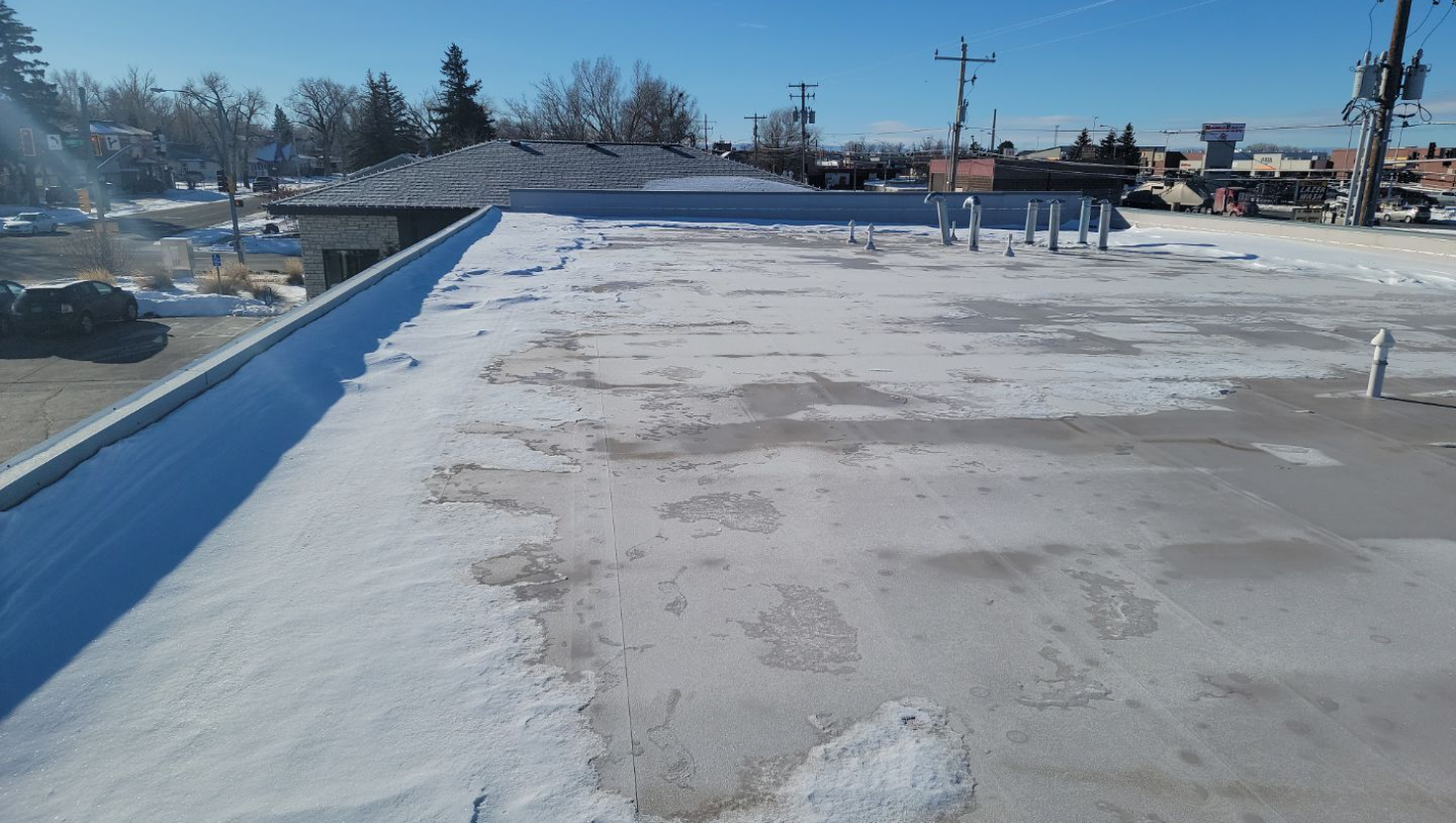
Cheyenne winters bring heavy, wet snow that can sit on a roof for days.
Deep drifts add real weight, especially where wind piles snow against valleys,
chimneys, and rooflines.
What to look for: sagging rooflines, cracked interior
ceilings, doors that stick, and creaking sounds during a thaw. Flat and
low-slope commercial roofs are the most vulnerable to load stress.
4. Ice dams
Ice dams form when heat escaping into the attic melts snow, which refreezes
at the cold eaves. The ridge of ice then traps meltwater and forces it back
under the shingles.
What to look for: thick icicles along the eaves, ice
building up at the gutter line, and water stains on interior walls or ceilings
near exterior walls. These leaks often appear mid-winter, not during rain.
5. UV exposure and altitude
At roughly 6,000 feet, Cheyenne sits in thinner air with intense
high-altitude sun. That extra ultraviolet exposure ages roofing faster than it
would at lower elevations.
What to look for: faded, brittle, or cracking shingles,
dried-out sealant around penetrations, and a chalky surface. South- and
west-facing slopes usually show UV wear first.
6. Freeze-thaw cycles
Southeast Wyoming swings above and below freezing constantly through winter
and spring. Water seeps into small cracks, freezes, expands, and pries
materials apart a little more each cycle.
What to look for: widening cracks, lifted flashing,
crumbling mortar on chimneys, and loose or popped fasteners. Freeze-thaw turns
minor flaws into open entry points for water.
7. Poor attic ventilation
Balanced intake and exhaust ventilation keeps a roof deck cool and dry.
When it fails, trapped heat and moisture warp decking, rot framing, and fuel
the ice dams described above.
What to look for: a hot attic in summer, frost or damp
insulation in winter, musty smells, and blocked soffit vents. Poor
ventilation quietly shortens the life of an otherwise sound roof.
8. Age and normal wear
Even a well-built roof wears out. Most asphalt shingle roofs in this climate
give roughly 20 years of service, though wind and UV can shorten that window
(general estimate; your roof may vary).
What to look for: widespread granule loss, bald patches,
multiple curling shingles, and repeated small leaks. When repairs start
stacking up, age is usually the underlying cause.
How do I know which one damaged my roof?
Start with the weather. A leak right after a windstorm points to uplift or
lost shingles, while dents that appear after a spring storm suggest hail.
Winter leaks near exterior walls usually mean ice dams, and slow, spreading
stains often trace back to ventilation or age. Because several causes can
overlap, a professional inspection is the reliable way to confirm the source.
Our team walks the roof, checks the attic, and documents findings with
photos so you understand exactly what is happening across your Cheyenne
property before any work is quoted.
How can I prevent it?
Prevention in the Cheyenne climate comes down to inspection, ventilation,
and quick repairs. A twice-yearly check, plus one after every major storm,
catches most problems while they are still cheap to fix.
- Wind: use properly nailed, wind-rated shingles and seal
down loose edges before they tear. - Hail: consider impact-resistant shingles or metal on
exposed slopes, and inspect after each storm. - Snow and ice: keep valleys and drains clear, and watch
load on low-slope roofs. - Ice dams: improve attic insulation and ventilation to
keep the deck cold and even. - UV and freeze-thaw: refresh sealant and flashing on
schedule instead of waiting for a leak. - Age: plan a replacement before failures multiply.
For local climate context, the
National
Weather Service in Cheyenne tracks the wind, hail, and snow events that
drive most of this damage.
Why choose Pete’s Builders?
Pete’s Builders is a licensed and insured roofing contractor based right on
Central Avenue in Cheyenne. We handle both commercial and residential roofs
built for Wyoming weather.
We serve Cheyenne, Laramie, and Burns in Wyoming, plus Scottsbluff, Sidney,
and North Platte in Nebraska, along with rural Wyoming. Local crews mean we
know how chinook wind, hail, and snow load behave on roofs here.
Get a free storm and damage inspection
Not sure which of these caused your problem? We will find out. Schedule a
free storm and damage inspection and get an honest, photo-documented
assessment of your roof.
Call Pete’s Builders at
(307) 514-5489 or visit
petesbuilders.com.
Located at 1816 Central Ave, Cheyenne, WY 82001.
Frequently Asked Questions
What is the number one cause of roof damage in Cheyenne?
Wind is the leading cause. Cheyenne’s frequent chinook and downslope gusts
lift shingle edges and tear off flashing, which then opens the roof to water.
How can I tell if my roof has hail damage?
Look for round spots where granules are missing, dents on metal vents and
gutters, and splatter marks on siding. Because hail damage is hard to see from
the ground, a close-up inspection is best.
Are ice dams a serious problem here?
Yes. Cheyenne’s cold eaves and repeated thaw cycles make ice dams common,
and they force meltwater under the shingles. Better attic insulation and
ventilation are the main fixes.
How often should I have my roof inspected?
Twice a year is a good baseline, ideally in spring and fall, plus one
inspection after any major wind, hail, or snow event.
Does high-altitude sun really damage my roof?
It does. At about 6,000 feet, Cheyenne gets intense UV that dries out and
cracks roofing faster, especially on south- and west-facing slopes.
Do you serve areas outside of Cheyenne?
Yes. We cover Cheyenne, Laramie, and Burns in Wyoming, plus Scottsbluff,
Sidney, and North Platte in Nebraska, and rural Wyoming.