
Metal roof installation in Nebraska comes down to a clear trade-off: higher upfront cost in exchange for decades of low-maintenance protection. For panhandle homes in Scottsbluff, Sidney, and North Platte, the pros are strong — metal handles high winds, sheds heavy snow, and resists hail dents when you choose thicker gauges. The cons are real too: it costs two to three times more than asphalt, dents can happen with large hail, and it needs skilled installation to avoid leaks. Metal is usually worth it if you plan to stay long-term. It is harder to justify for a short-term hold.
Quick answer
Metal roofing — especially standing seam — sheds snow, resists high winds and hail, and can last 40–70 years with little upkeep, making it one of the best fits for Nebraska’s climate. It costs more upfront than shingles but lasts far longer.
| Metal roof | Detail |
|---|---|
| Lifespan | 40–70 years |
| Wind & snow | Sheds snow, resists uplift |
| Hail | Handles impact better than most |
| Maintenance | Low |
| Best for | WY wind, snow & longevity |
Why do Nebraska panhandle homes consider metal roofing?
The high plains around Scottsbluff and Sidney are hard on roofs. Homes here face straight-line winds, spring hail, deep winter snow load, and intense high-altitude UV. That mix wears out standard shingles faster than in milder climates.
Metal roofing answers several of those problems at once. Interlocking panels resist wind uplift, smooth surfaces shed snow, and factory finishes hold up to Nebraska sun. For many North Platte and Sidney homeowners, that resilience is the whole appeal.
Still, metal is not automatically the right call. The best choice depends on your budget, how long you plan to own the home, and which metal system you pick. Below is a balanced look at both sides.
What are the pros of metal roofing in Nebraska?
- Longevity. Metal roofs commonly last 40 to 70 years as a general industry range, far beyond the typical 15 to 25 years for asphalt shingles.
- Wind performance. Properly fastened standing seam and metal shingle systems are rated for high wind speeds, which matters across the exposed Nebraska panhandle.
- Snow shedding. Slick metal surfaces let heavy snow slide off, reducing the risk of ice dams and freeze-thaw damage.
- Fire and rot resistance. Metal will not ignite from embers and does not rot, curl, or grow algae the way older shingles can.
- Energy efficiency. Reflective and “cool roof” finishes bounce back summer heat, which can trim cooling costs during North Platte’s hot months.
- Low maintenance. Once installed correctly, a metal roof needs little more than occasional inspections and fastener checks.
What are the cons of metal roofing in Nebraska?
- Higher upfront cost. Metal typically costs two to three times more than asphalt shingles as a general range, which is the biggest hurdle for most Scottsbluff homeowners.
- Denting risk. Large hail can dent softer metals like aluminum or thin-gauge panels. Thicker steel and standing seam profiles resist this far better.
- Installation matters. Metal is less forgiving than shingles. Poor flashing or fastening can cause leaks, so crew experience is critical.
- Repairs and matching. Replacing a damaged panel years later can mean color and finish differences as products age.
- Expansion and noise myths. Metal expands and contracts with Sidney’s freeze-thaw swings, which quality clip systems manage — more on the noise question below.
Standing seam vs. corrugated vs. metal shingle — which suits the high plains?
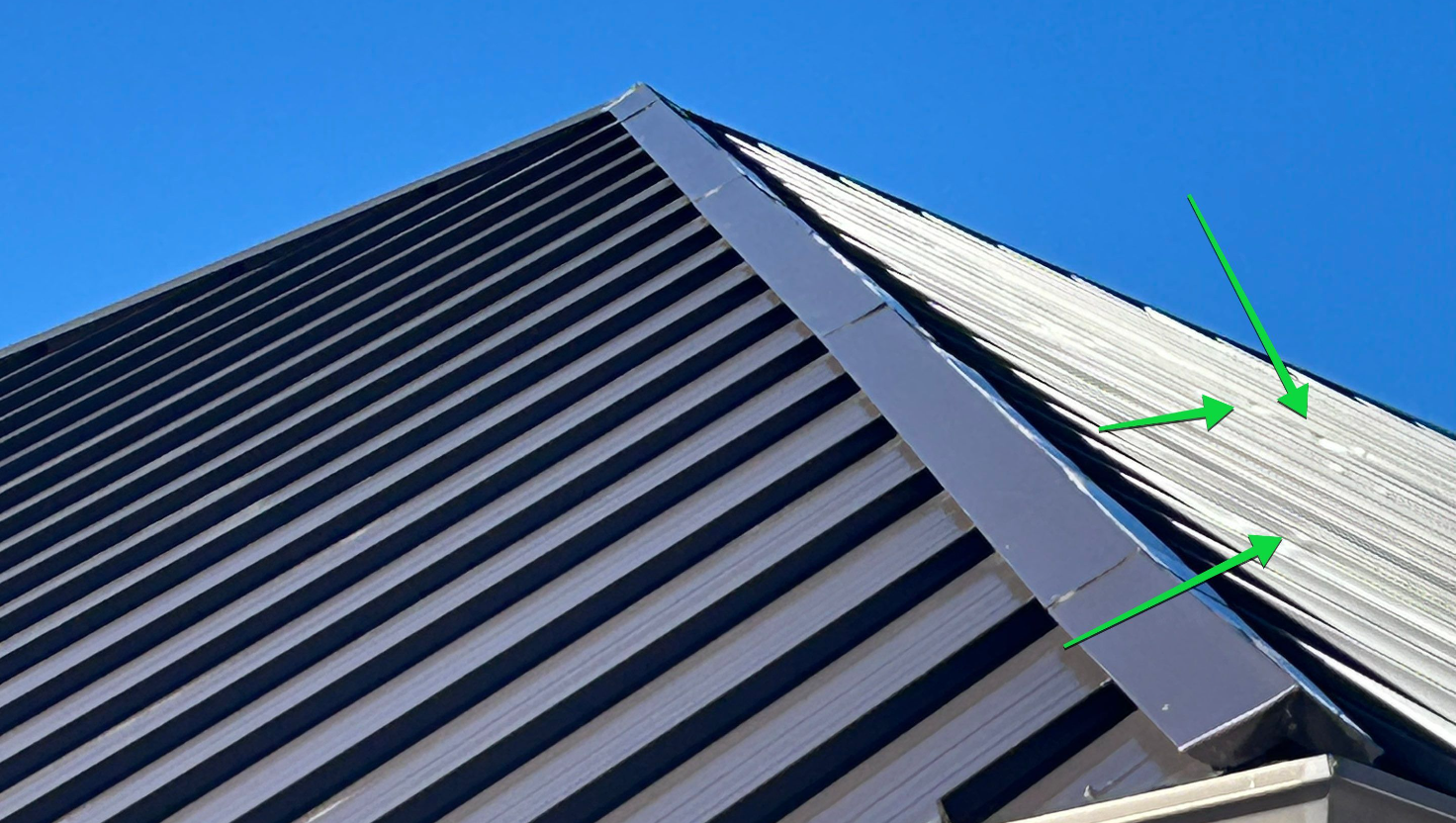
Standing seam uses hidden fasteners and raised vertical seams. It is the premium choice for wind and water resistance, and it handles Nebraska snow shedding well. It also carries the highest price of the three.
Corrugated (exposed-fastener) panels cost the least and install quickly. The trade-off is exposed screws with rubber washers that need periodic checks, since freeze-thaw cycles can loosen them over time.
Metal shingles or tiles mimic the look of asphalt, slate, or wood shakes. They blend into established Scottsbluff neighborhoods while keeping most metal benefits. Pricing usually sits between corrugated and standing seam.
Do metal roofs really cause noise, condensation, or lightning problems?
These are the myths we hear most. On noise, a metal roof installed over solid decking and underlayment is not noticeably louder than shingles in rain or hail. The “loud barn roof” impression comes from open-frame installs without decking.
Condensation is managed with proper underlayment, ventilation, and in some cases a vented assembly. Done right, moisture is not a chronic issue in Nebraska’s dry, cold winters.
On lightning, metal does not attract strikes. If struck, it actually disperses energy and is non-combustible, which is a safety advantage rather than a risk.
When is metal worth it — and when is it not?
Metal makes the most sense when you plan to stay in your North Platte or Sidney home long enough to benefit from its lifespan. Over 40-plus years, the higher upfront cost spreads thin compared with replacing asphalt two or three times.
It is also a strong fit for exposed, high-wind lots and homes where snow load and freeze-thaw are constant concerns. The durability pays back in fewer repairs.
Metal is harder to justify if you expect to sell within a few years, if your budget is tight, or if a shorter-lived asphalt system already meets your needs. In those cases, a quality architectural shingle may be the smarter spend. An honest inspection helps you decide without pressure.
Frequently asked questions
How long does a metal roof last on the Nebraska panhandle?
As a general industry range, metal roofs last 40 to 70 years depending on the metal type, gauge, and finish, well beyond typical asphalt shingles in the Scottsbluff and Sidney climate.
Will hail dent a metal roof in North Platte?
Large hail can dent softer or thin-gauge metals. Thicker steel and standing seam systems resist denting much better, which is why gauge selection matters on the high plains.
Are metal roofs noisy during rain or hail?
Not when installed over solid decking and underlayment. That assembly dampens sound so a metal roof is comparable to shingles indoors.
Is metal roofing worth the higher cost?
It usually is if you plan to stay long-term, since one metal roof can outlast two or three asphalt roofs. For short-term ownership, asphalt may cost less overall.
Does a metal roof help with snow?
Yes. Smooth metal surfaces shed snow and reduce ice dam and freeze-thaw problems, which is a real benefit across Nebraska winters.
Which metal roof type is best for high winds?
Standing seam with concealed fasteners generally offers the best wind and water resistance for exposed panhandle lots, though metal shingles also perform well.
Talk to a roofer who knows high-plains weather
Choosing between metal and asphalt should start with a look at your actual roof, budget, and how long you plan to stay. Pete’s Builders serves Scottsbluff, Sidney, and North Platte across the Nebraska panhandle, along with Cheyenne, Laramie, and Burns in Wyoming.
Call (307) 514-5489 or visit us at 1816 Central Ave, Cheyenne, WY 82001 to schedule an inspection and get a straight answer on whether metal is right for your home.
Reviewed by the Pete’s Builders Roofing Team — licensed & insured Wyoming roofing contractors.